
Walk-In Showers: When a Bathroom Finally Feels Like a Retreat
A well-designed walk-in shower does more than update a bathroom. It changes how the room feels to start and end your day.
Many of our clients consider walk-in showers when remodeling their bathrooms in Lake Oswego, West Linn, and Beaverton.
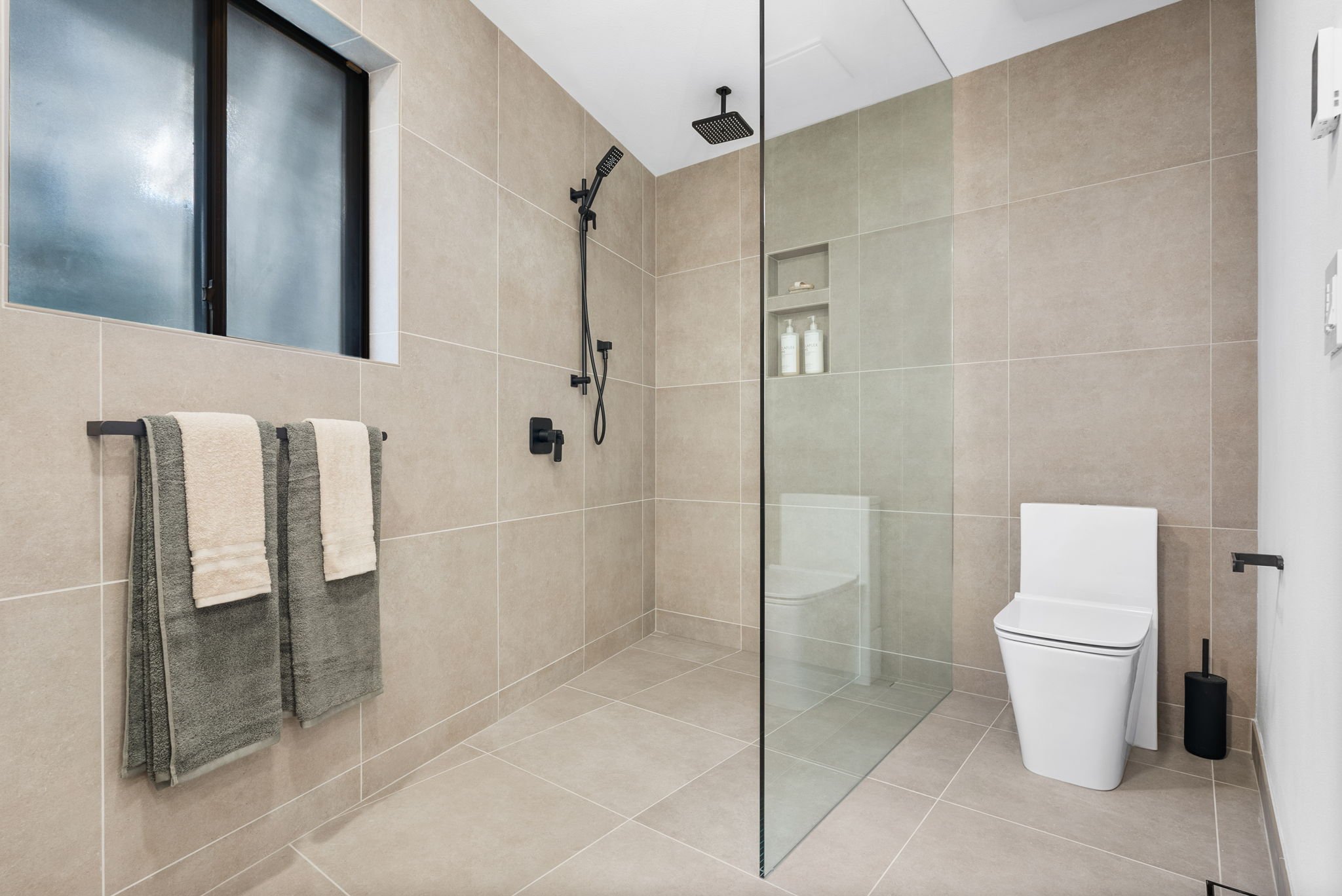
There’s a quiet satisfaction in stepping into a space with no tight doors, no awkward turns, and no sense of rushing in and out.
Light moves across the tile, the room feels open, calm and intentional.
But that feeling doesn’t happen automatically. The simplicity you see depends on decisions made early in the bathroom remodel.
Size: Comfort Is Proportional
Proportion matters more than square footage.
A well-functioning walk-in shower allows:
two people to pass without turning sideways
easy access to shower controls
space to stand away from walls and fixtures
room for a bench or niche without crowding
In practice, many homeowners in Lake Oswego and West Linn are happiest once the interior space moves beyond the feeling of a “stall” and into the feeling of a small room. That transition usually happens when width and depth are well balanced.
Curbless vs. Low Curb: The Hidden Structure
The cleanest walk-in showers appear level with the bathroom floor. Achieving that requires planning long before tile is selected.
If this step is rushed, the shower either leaks visually (a noticeable ramp) or literally (water migration). When executed correctly, the floor transition disappears and that absence is what feels luxurious.
To slope the shower floor toward the drain, the floor framing or subfloor must be recessed or rebuilt so the finished tile surface can drop while still aligning with the rest of the bathroom.
Key implications:
Floor joists may need modification
Adjacent flooring heights must be coordinated
Waterproofing must extend farther than expected
Drain placement becomes critical
Glass Panels: Much More Than Just a Barrier
Glass determines whether the shower reads as architecture or enclosure. The goal is controlling splash while preserving openness. Panel length, entry width, and shower head placement all interact.
Common approaches:
Single fixed panel (most open feeling)
Two panels with return
Full enclosure with minimal hardware
Many showers fall short not because of poor tile work but because the glass was designed after the plumbing. Good glass design makes the shower feel larger than the bathroom itself.
Heat: Comfort Changes Everything
You may not notice it immediately. The tile is stunning. The glass is seamless. But if the air feels chilly or the floor feels cold underfoot, the experience never quite becomes relaxing.
A few thoughtful choices can completely change that:
Heated floors that continues into the shower area
Extra warmth nearby so the room feels cozy, not drafty
Designing the space so heat stays where you need it
Warmth is one of those details people don’t talk about but they absolutely feel. With it, the shower becomes inviting and feels like a place you actually want to linger, not just step in and out of.
When Everything Aligns
A walk-in shower succeeds when the technical work disappears. You don’t admire the slope, the waterproofing, or the framing yet they are the reason the space feels calm and resolved.
The end result isn’t just visual openness.
It’s the feeling that the room was thought through before it was built.
And that is what turns a remodeled bathroom into a place you actually want to spend time in.